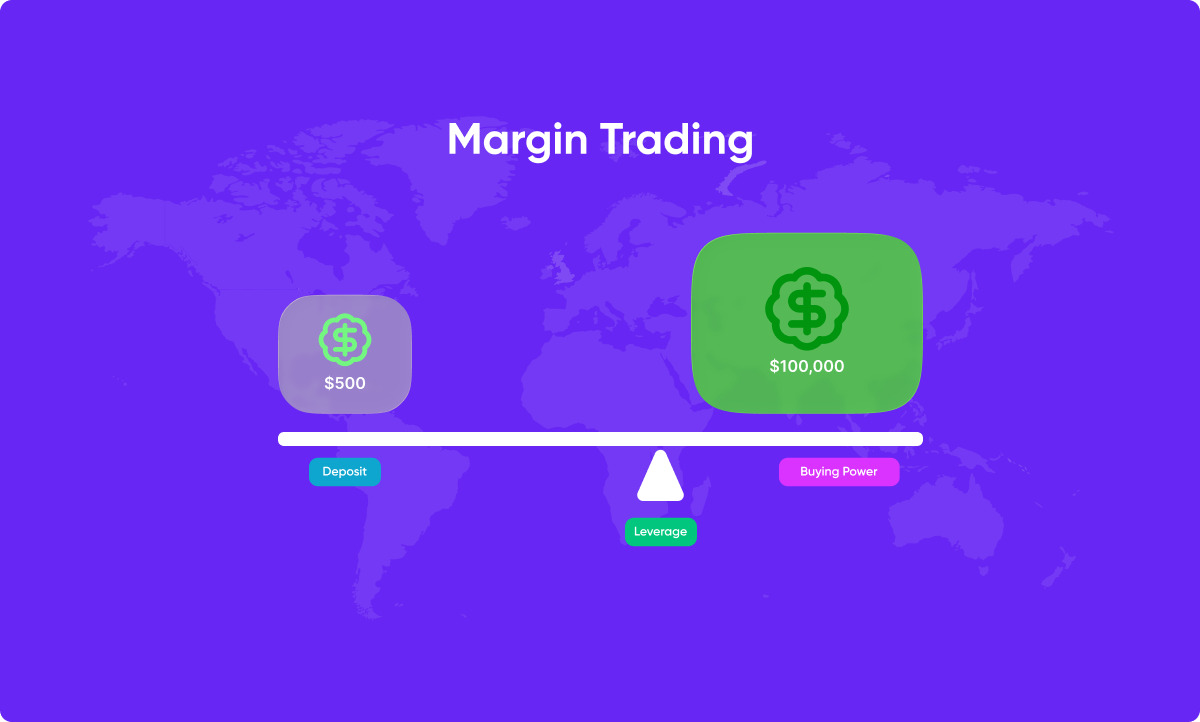
Margin can feel complicated until you realise it is just a deposit. When you open a forex position, your broker holds a small portion of the full trade value aside. This is the money that backs the leverage you are using. The rest of the trade’s value is exposure rather than a cash outlay.
Many traders learn margin alongside early concepts in forex trading because the two are closely linked. Once you understand how leverage interacts with margin, choosing position sizes becomes much easier.
The general formula most brokers use is simple:
Required margin = (Trade size ÷ Leverage)
Trade size is measured in units. For example, 0.10 lot in forex is 10,000 units of the base currency. Leverage shows how much exposure you can control compared to your deposit.
Here is a quick example:
If you open a 10,000 unit position with 1:30 leverage: 10,000 ÷ 30 = 333.33 units of margin required.
Your platform then converts that figure into your account currency if needed.
Currency pairs can change the margin required because not all trades are calculated in the same currency. Some pairs use euros, others use pounds, dollars, yen, or something else entirely. Your platform handles the conversion automatically, but it is useful to understand why the amount sometimes looks different from one pair to another.
Here is the general idea:
For example, a trade on EUR/USD begins in euros, while a trade on GBP/JPY begins in pounds. The conversion into your account currency is what creates the slight differences you may notice.
This is one reason traders often practise first using a demo account, so they can see how margin behaves without any pressure.
The standard calculation is trade size divided by leverage. This gives the margin required to open the trade.
It means you need 30 dollars to open the position. The remaining exposure comes from leverage.
With 1:500 leverage, you control 500 dollars of exposure for each 1 dollar of margin. It requires very little margin but carries a significantly higher risk.
Very risky. Price only needs to move a small amount for gains or losses to become large relative to your balance.